If a pregnant woman doesn’t feel safe pushing her baby out, should she be forced to? In theory, no but not all pregnant women are able to have a say. The Nice best – practice guidance was revised in 2011 and had recognised that women should be the primary decision maker in their childbirth. Despite this guidance it doesn’t always work out this way. You might have heard the saying many times through life but having a C-section (Cesarean) is not about being to posh to push, it is NOT an easy way to give birth.
NHS statistics showed in June 2019 that 1 in 4 women have had a C-section. Among 620,604 single-baby births, 147,726 (23.8%) were delivered by C-section. The rates of C-section ranged from 14.9% to 32.1% between different NHS trusts. Women are more likely to have a C-section if they had one previously.
Many people stereotype women for having a C-section but how can you judge somebody for wanting to bring their baby as safe as possible into the world.
36 weeks pregnant I found out I was able to have a C-section, I had so many complications throughout my pregnancy. Why they call it morning sickness is beyond me as I had it practically all day every day from 3 weeks pregnant, I felt awful. I had so many prescribed medications to help but nothing at all worked. At 20 weeks pregnant I was immediately put under a consultant due to my baby having an enlarged kidney. I was scared, I cried for hours not knowing what was happening next.
The tabloids have given bad impressions on women having C-sections by displaying celebrities that choose to have one as they find it “easier”. Some retain these opinions and reproduce it to think that everyone that has a C-section is just doing it for the easiness rather than the health of their baby.
After all the complications and the worry for my baby’s health I don’t think I’d have had the strength to go through the pain and exhaustion of a vaginal birth, so that was my reason in having an elective C-section.
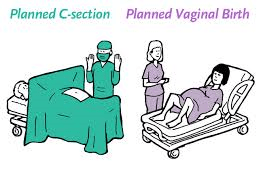
On the 3rd September 2018 I got to meet my baby boy. The hospital only does 4 planned C-sections a day. I watched three other women arrive after me, I was so excited thinking I would be first to go into theatre but later informed it was not first come first go down.
A few weeks after having my baby I was asked if I felt bonded with my son due to having a C-section, indeed I did, I had skin to skin contact the second his umbilical cord was cut. I’m guessing my emotions towards my baby were similar as all new mother’s no matter the delivery outcome. I was so overwhelmed by the whole childbirth, even though I did not go through hours of pain during labour I had pain for many weeks after.
After birth; Sneezing, coughing, laughing and anything else to do with stomach hurts after you’re C-Section. You become limited to what you can do for weeks after, you’re left with a scar which may come with the possibility of complications such as: infection of the wound.

So, this is some of my pregnancy and the reasons why I had to have an elective Cesarean, I’m glad I had my baby boy this way and I would be more than happy to have another one without a doubt.
It’s no surprise that social interaction plays a role in learning. I’d like to apply it to social learning theory; the principles of this theory are that we take the attitudes of who we value. The study of Bandura (1960) Bobo doll experiment giving us the ‘ARRM’ breaking this down it follows the pattern of Attention, Retention, Reproduction and Motivation. I am now applying this theory to my blog. If a mother had a natural birth first time round and fell pregnant again but needed a C-section due to medical reasons, let’s say it was an overwhelming experience with her first child and was in a lot of pain afterwards which people saw this and would retain the information that mum had a C-section which was a bad experience and wasn’t a natural feeling for her, she would then reproduce the behavior of being negative about C-sections to another mother when the motivation is right, for example thier friend has chosen to have a C-section for her first birth and this results in negative feelings and hurtful comments towards her friend for wanting to go through that experience when they are fully capable of a natural birth.

Some of the British tabloids have said its simply just ‘to posh to push’ but what are some of the reasons behind Caesareans? Well firstly; baby or mother may not be able to birth, complications during pregnancy or birth or simply just because you are too afraid to have a vaginal birth. Researchers have showed that one lady planned her birth to avoid conflict with her final exams at college, many women have opted for a C-section due to not wanting the long hours of pain and wear and tear of the body.
From a psychology point of view, I’d like to relate this type of stereotyping to in-groups and out-group’s theory of Tajfel et al (1971). The basic principles of this social psychology term are human beings will form groups which have common qualities about themselves and usually any group which doesn’t have traits or qualities are classed as the ‘out-group’.
Now let’s apply this to mothers who have had C-sections. For example; the principle that ‘in-groups’ will seek out to first categories people then set out to find a negative aspect of the ‘out-group’. The ‘in group’ would assume a superior dominance over the mothers who had a C-section which these prejudice beliefs that ‘mothers who pushed thier babies out didn’t take the so-called easy route’. Scapegoating is used as a defence mechanism to put blame on mothers who have had c-sections but wish to maintain thier self-image.
Question time!
- If you have had a C-section what comments have you received off people whether they are good are bad?
- If you had a natural birth would you have liked a C-section?
- Do you really think people can judge ladies having C-sections weather they are planned, emergency or by choice?
References
NHS (2019). Statistics on caesareans. Retrieved from
http://www.nhs.co.uk/conditions/caesarean-section/
Song, S. (2004, April 11). Too posh to push. Retrieved from http://content.time.com/time/magazine/article/0,9171,610086,00.html
Schiller, R. (2018). Instead of judging women who want a C-section, why not listen?. The Guardian. https://www.theguardian.com/commentisfree/2018/aug/21/women-c-section-birth-planning-caesarean
 Too posh to push